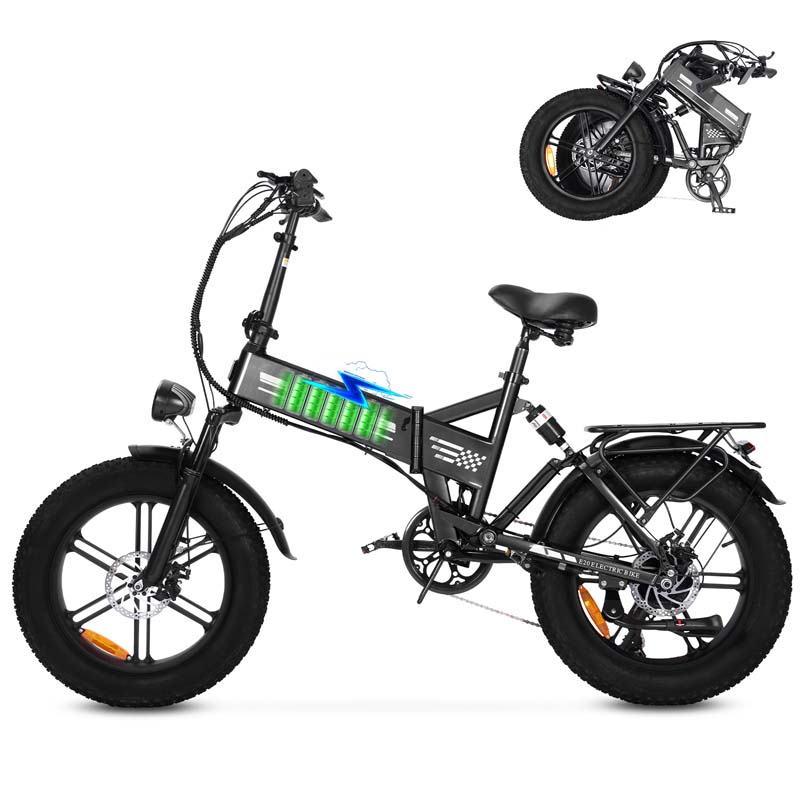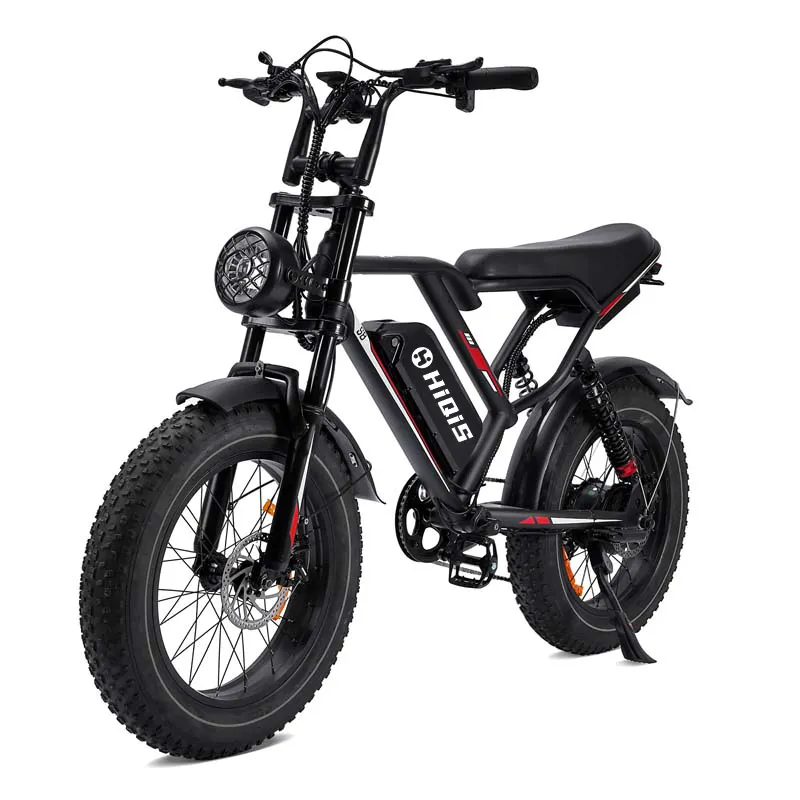
A fat tire electric bike can make a noticeable difference when you ride across gravel paths, sandy trails, or uneven urban roads. Narrow tires may struggle to maintain traction on loose surfaces, while a fat tire design provides a wider contact area that can help improve stability. However, choosing the right e-bike also means considering battery capacity, riding range, braking performance, and suspension.
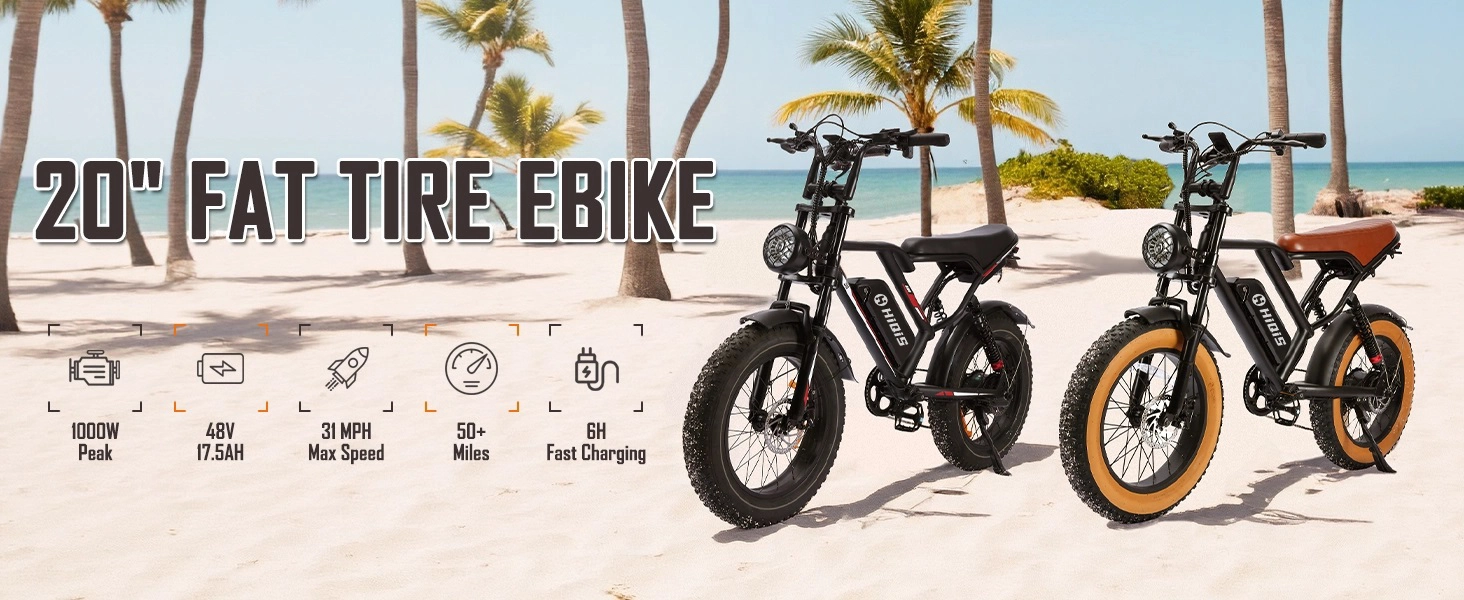
The HiQiS 20-inch fat tire electric bike combines a 48V 17.5Ah lithium battery, a listed 1000W motor system, and front and rear suspension for versatile riding. With a stated range of 35–50 km per charge and a maximum load capacity of 150 kg, it suits riders looking for an electric bike for outdoor adventures and short-distance commuting. Understanding these specifications can help you decide whether this e bike fat tire model matches your daily riding needs.
Why Choose a Fat Tire Electric Bike?
Fat tires are designed to provide a broad contact area with the riding surface. This feature can be useful when you encounter loose gravel, packed sand, snowy paths, or uneven ground. Combined with an appropriate tire pressure and riding technique, the wider tires can help you maintain control across changing terrain.
The HiQiS model features 20-inch off-road fat tires and front and rear suspension. These features support riders who want a compact-wheel electric bike for recreational use and mixed-surface riding.
Key benefits include:
- Wider tires: Help maintain traction on loose or uneven surfaces.
- Front and rear suspension: Absorb some impacts from bumps and rough paths.
- Compact 20-inch wheels: Offer a smaller wheel format than many conventional mountain bikes.
- Versatile riding: Support outdoor exploration and short-distance travel, depending on local conditions and regulations.
HiQiS 1000W Fat Tire Electric Bike Specifications
Before purchasing a 1000W fat tire electric bike, review its battery, motor configuration, braking system, and weight. These details affect practical usability, charging routines, and transportation.
| Specification | HiQiS Electric Bike |
|---|---|
| Tire size | 20-inch off-road fat tires |
| Listed motor power | 1000W |
| Battery | 48V 17.5Ah lithium battery |
| Stated riding range | 35–50 km per charge |
| Maximum speed | 50 km/h |
| Maximum load | 150 kg |
| Drive configuration | Front and rear wheel drive, as listed |
| Brakes | Disc brakes; hydraulic type stated in the description |
| Gearing | Shimano 7-speed derailleur |
| Suspension | Front and rear |
| Charging time | 6–7 hours |
| Net weight | 45 kg |
| Certifications listed | CE, RoHS, FCC, UL2849 |
The battery’s nominal energy capacity is approximately 840Wh, calculated by multiplying 48V by 17.5Ah. Actual range depends on rider weight, terrain, speed, temperature, tire pressure, and riding mode.
Specification note: The supplied product information describes a dual-drive system and front and rear wheel drive, but the specification table also lists a single motor. Confirm the actual motor configuration with HiQiS before ordering. The product description mentions hydraulic disc brakes, while the specification table says disc brakes, so you should also verify the exact brake type.
Where Can You Use a 20-Inch Fat Tire E-Bike?
A 20-inch fat tire electric bike can suit several riding scenarios, although performance depends on the terrain, rider, and applicable local rules.
1. Gravel Paths and Outdoor Trails
Loose gravel can shift under your tires, making stable handling important. The wide tires and suspension on this HiQiS e-bike can help you manage uneven surfaces, but you should still reduce speed on loose corners and inspect the route before riding.
2. Sandy or Snowy Surfaces
Fat tires can provide a broader contact area on sand and some snow-covered paths. However, tire pressure, snow depth, motor output, and ground conditions affect traction. Avoid assuming that every fat tire bike can handle deep snow or soft sand equally well.
3. Short-Distance Commuting
The stated 35–50 km range may accommodate some local trips without daily charging. For example, a 10 km round trip would represent approximately 20–29% of the stated range under idealized arithmetic; real-world battery consumption may be higher.
At 45 kg, this model is relatively heavy to lift or carry up stairs. Consider your storage location, parking arrangements, and charging access before using it as your primary commuter bike.
How to Choose the Right Fat Tire E Bike
Use these steps to assess whether the HiQiS model fits your requirements.
- Calculate your daily distance. Add your round-trip mileage and allow extra battery capacity for hills, cold weather, and detours.
- Check the motor configuration. Confirm whether the bike uses one motor or two and clarify the rated and peak power.
- Review braking and suspension. Ask for details about the hydraulic brake system and maintenance requirements if you plan to ride frequently on rough terrain.
- Check the maximum load. Keep your body weight and any carried equipment within the stated 150 kg limit.
- Confirm legal requirements. The listed maximum speed is 50 km/h. Depending on your location, this power and speed may place the bike outside the legal definition of an ordinary street-legal e-bike. Check local classification, registration, helmet, and road-use requirements before riding.
Fat Tire Electric Bike vs. Standard Electric Bike
| Feature | HiQiS Fat Tire Electric Bike | Typical Standard Electric Bike |
|---|---|---|
| Tire design | Wide, 20-inch off-road tires | Often narrower tires |
| Loose-surface riding | Designed for varied terrain | Depends on tire and frame design |
| Suspension | Front and rear | Varies by model |
| Weight | 45 kg net | Varies; often lighter |
| Best-fit use | Outdoor riding and mixed surfaces | Urban commuting and paved routes |
These are general design differences, not universal performance guarantees. Compare the actual specifications of individual bikes before making a purchase.
FAQ
1. How far can the HiQiS fat tire electric bike travel on one charge?
The stated range is 35–50 km per charge. Rider weight, terrain, speed, temperature, and riding mode can reduce the distance you achieve in practice.
2. How long does the 48V 17.5Ah battery take to charge?
HiQiS lists a charging time of 6–7 hours. Use the supplied compatible charger and follow the manufacturer’s battery care instructions.
3. Is this 1000W fat tire electric bike suitable for public roads?
That depends on local electric-bike regulations. With a listed maximum speed of 50 km/h, this model may require a different vehicle classification, registration, or other approvals in some locations. Verify the applicable rules before riding on public roads.
Conclusion
The HiQiS fat tire electric bike combines 20-inch off-road tires, a 48V 17.5Ah battery, front and rear suspension, and a stated riding range of 35–50 km. Its 150 kg load capacity and 45 kg net weight are also important factors when evaluating everyday usability. If you want an e bike fat tire model for gravel paths, outdoor exploration, or short-distance trips, compare these specifications with your riding conditions and confirm the motor and brake configurations before purchase.
Ready to find your next electric bike? Visit HiQiS to review the product details, confirm delivery availability for your location, and ask the support team about motor configuration, warranty coverage, and local road-use requirements before placing your order.